Business leaders are often expected to make important decisions quickly, confidently, and effectively. Yet many of the decisions that shape organizations are made under conditions where information is incomplete, outcomes are uncertain, and clear answers may not exist. Economic shifts, technological developments, market disruptions, and changing customer expectations can create situations where leaders must act before all variables are known. As a result, decision-making under uncertainty has become an increasingly important topic at business leadership conferences, including the CXO 2.0 Conference, where business leaders examine approaches to navigating complex business environments.
According to a PwC survey, nearly 60% of CEOs believe the global economy will improve over the coming year despite ongoing uncertainty, underscoring the need for leaders to make strategic decisions even when future conditions remain difficult to predict. Understanding how effective leaders approach uncertainty provides valuable insights into the decision-making processes that support organizational resilience and long-term growth.
TL;DR Quick Overview
- CEOs rarely have access to complete information before making decisions.
- Effective leaders focus on informed judgment rather than certainty.
- Data plays an important role, but leadership decisions often extend beyond available data.
- Scenario planning helps organizations prepare for multiple outcomes.
- Strong decision-making processes can reduce risk during uncertain periods.
- Executive leadership events continue to explore practical approaches to uncertainty and change.
Understanding Today's Leadership Environment
Navigating difficult business conditions has long been part of leadership. Today, however, rapid shifts across industries have added new layers of complexity to executive decision-making. Leaders must often respond to developments that evolve faster than traditional planning cycles. Discussions around these challenges continue at global leadership summits, where organizations examine how decision-making practices can adapt to changing business conditions. Several factors contribute to this environment, including:
-
Rapid Market Changes
Consumer preferences, competitive dynamics, and industry structures can shift quickly. Business leaders may need to make decisions before long-term trends become fully visible. Organizations that wait for complete certainty may miss opportunities to respond effectively to market developments.
-
Expanding Technology Influence
Technology continues to affect nearly every aspect of business operations. New tools, platforms, and business models create opportunities but also introduce uncertainty regarding implementation, investment priorities, and future impact. Leaders are often required to assess technologies that are still evolving while balancing operational requirements and strategic objectives.
-
Increased Global Interconnectedness
Events occurring in one region can influence supply chains, customer demand, regulatory environments, and business performance elsewhere. This interconnected environment makes forecasting more complex and increases the importance of adaptable decision-making.
Source
The Factors Behind Effective Leadership Decisions
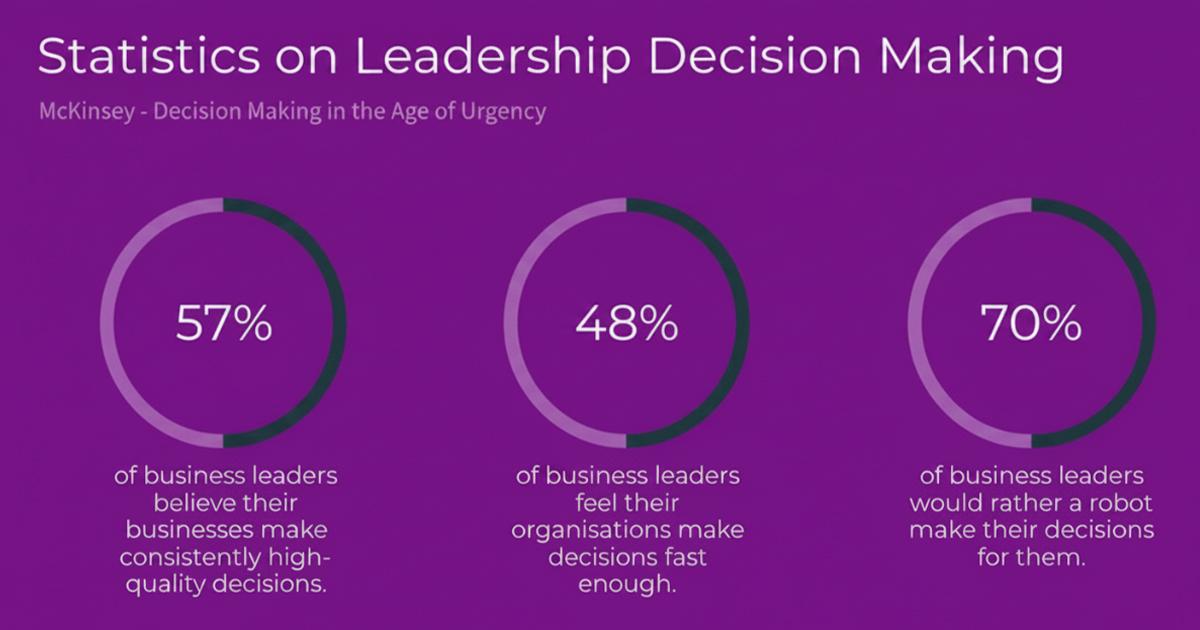
When complete answers are unavailable, effective leaders rely on a combination of information, experience, and structured decision-making processes. Rather than seeking perfect answers, many executives focus on improving the quality of decisions based on the information available to them. As organizations continue to navigate increasingly complex business environments, decision-making practices are receiving greater attention at executive leadership summits of 2026.
According to PwC's 2025 Pulse Survey, 58% of CEOs reported actively seeking diverse perspectives and encouraging internal debate in their decision-making, underscoring the importance of incorporating multiple viewpoints when evaluating complex business challenges. Several factors often guide executives as they navigate important business decisions, including:
-
Data Provides Direction
Data remains an important foundation for decision-making. Financial performance indicators, customer insights, operational metrics, and market intelligence can help leaders understand current conditions. However, data often explains past and present conditions more effectively than future outcomes. This is why data is typically used as a guide rather than a guarantee.
-
Experience Shapes Judgment
Leadership experience can help executives recognize patterns, identify risks, and evaluate opportunities. While every situation is unique, previous experience often provides valuable context for assessing uncertain scenarios and making informed choices.
-
Diverse Perspectives Improve Decisions
Many CEOs actively seek input from leadership teams, subject matter experts, and external advisors before making major decisions. Multiple viewpoints can help identify blind spots, challenge assumptions, and strengthen decision quality.
How Leaders Can Build Better Decision-Making Frameworks
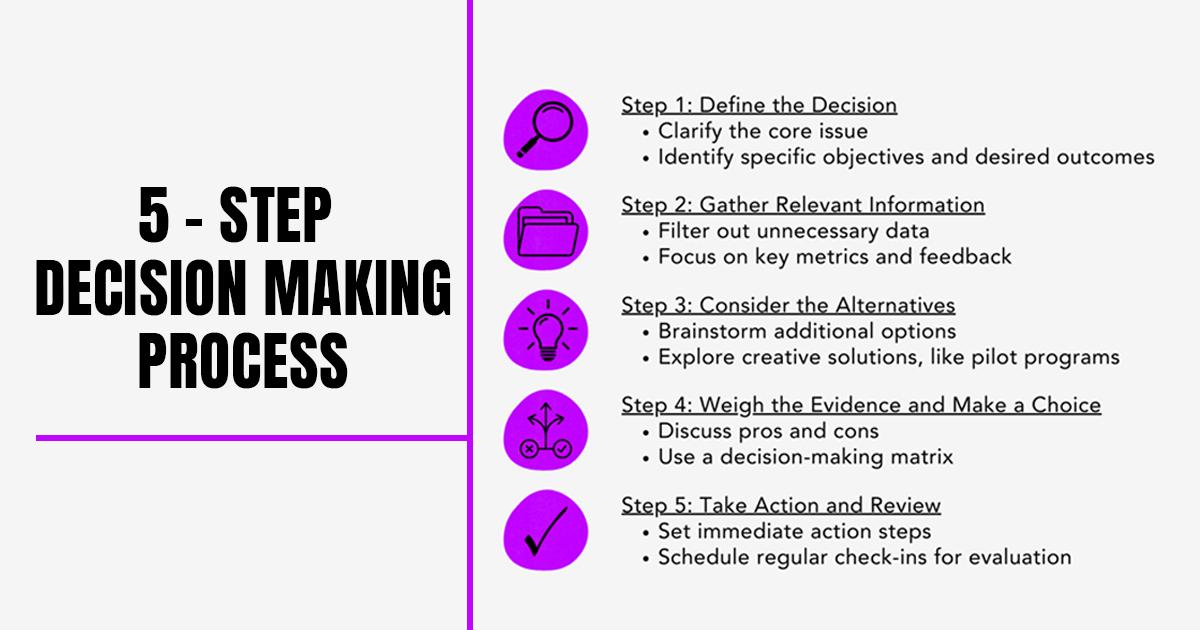
Imagine a CEO evaluating whether to expand into a new market. Market research suggests strong demand, but economic conditions remain uncertain, and competitor activity is increasing. Rather than delaying the decision indefinitely, the leadership team establishes a structured framework that includes defining success metrics, assessing risks, gathering stakeholder input, and developing multiple scenarios. The organization then launches a limited pilot program to test its assumptions and collect real-world data.
This approach allows the company to make informed decisions while managing uncertainty. Despite waiting for complete certainty, leaders rely on a framework that combines data, risk assessment, and continuous evaluation to guide action. Therefore, as business environments become increasingly difficult to predict, organizations are increasingly focused on improving decision-making processes rather than attempting to anticipate every possible outcome. Several areas continue to receive attention across leadership circles:
- Improving access to high-quality business intelligence.
- Encouraging cross-functional collaboration.
- Strengthening strategic planning processes.
- Developing leadership adaptability.
- Expanding scenario-planning capabilities.
- Building organizational resilience.
Addressing these priorities can help organizations respond more effectively to changing conditions while supporting stronger executive decision-making.
Source
The Power Of Decisive Leadership
Many leadership decisions must be made despite limited information and unpredictable future conditions. As organizations face increasingly complex business environments, discussions are shifting toward practical approaches that help executives evaluate risks, assess opportunities, and make informed decisions under changing conditions.
These themes continue to shape conversations at the CXO 2.0 Conference, where business leaders explore leadership strategies, decision-making frameworks, and approaches to navigating uncertainty in a rapidly evolving business landscape. You can also join our upcoming business leadership conference in Singapore to explore the perspectives, experiences, and leadership approaches shared by executives from diverse industries.
FAQs
1. What role does data play in executive decision-making?
Data helps leaders understand trends, performance, and potential risks. However, it is typically combined with experience, judgment, and strategic considerations when making major decisions.
2. Why is adaptability important for leaders?
Adaptability allows leaders to respond effectively when conditions change unexpectedly. It can help organizations manage risk while identifying new opportunities.
3. Who can attend the CXO 2.0 Conference?
Our business leadership conference welcomes executives, entrepreneurs, consultants, and decision-makers seeking insights into leadership, strategic planning, and organizational growth.
4. Why are leadership conferences important for business executives?
Leadership conferences provide a platform to explore industry developments, management practices, business strategies, and leadership approaches. They also help executives exchange ideas and learn from peers and industry experts.
5. How do successful leaders balance risk and opportunity?
Effective leaders evaluate both potential benefits and possible challenges before making decisions. Instead of eliminating risk altogether, they assess potential outcomes carefully and make decisions that align with organizational goals.